Sentinel Artificial Safety Intelligence Model
Predictive risk intelligence for high-risk operations
SASI™ is Sentinel's proprietary predictive intelligence system, designed to analyse live and recurring operational signals in order to detect emerging risk patterns before incidents occur. It is leadership-governed and AI-enhanced: intelligence that sharpens leadership judgment and never replaces it.
What SASI™ is
Not software. Not reporting.
SASI™ is an engineered system of intelligence, leadership integration, and operational control. It exists to move an organization from reactive safety management to predictive, leadership-driven operational risk control.
Emerging risk conditions are identified while they are still forming, not reconstructed after the fact.
Complex operational conditions become clear, prioritized leadership decisions.
Intelligence lands inside daily operational rhythms, not in a report filed later.
Leaders see where risk is forming, how it is evolving, and what action is required.
The key innovation
Pressure precedes incidents
Most safety systems watch lagging indicators. They tell you what already went wrong. SASI™ treats operational pressure as a measurable risk condition rather than background noise, because pressure is where incidents originate.
- Schedule compression and production push
- Manpower strain and workforce shortages
- Concurrent high-risk work and simultaneous operations
- Fatigue and environmental burden
- Leadership overload and span of control
SASI™ measures pressure before incidents occur, and puts that measurement in front of the leaders who can relieve it.
How SASI™ works
Data to control, continuously
Each stage is a transformation. The cycle runs in real time so that conditions are continuously evaluated, intelligence stays current, and action is aligned with actual exposure.
Signal aggregation
Operational signals are collected across the environment: work execution, workforce and human performance, environmental conditions, system integrity, and operational pressure. Completeness and relevance, not volume.
Signal structuring
Inputs are organized into a standardized, controlled structure aligned to defined risk dimensions. Fragmented inputs become a coherent system of signals.
Risk intelligence generation
Disciplined analytical logic, supported by AI-assisted pattern recognition, detects emerging patterns, trend development, risk convergence, and deteriorating control effectiveness.
Leadership decision enablement
Intelligence is translated into prioritized visibility, contributing factors, defined points of intervention, and integration into leadership review and decision processes.
What leadership receives
Decision-ready, not data-heavy
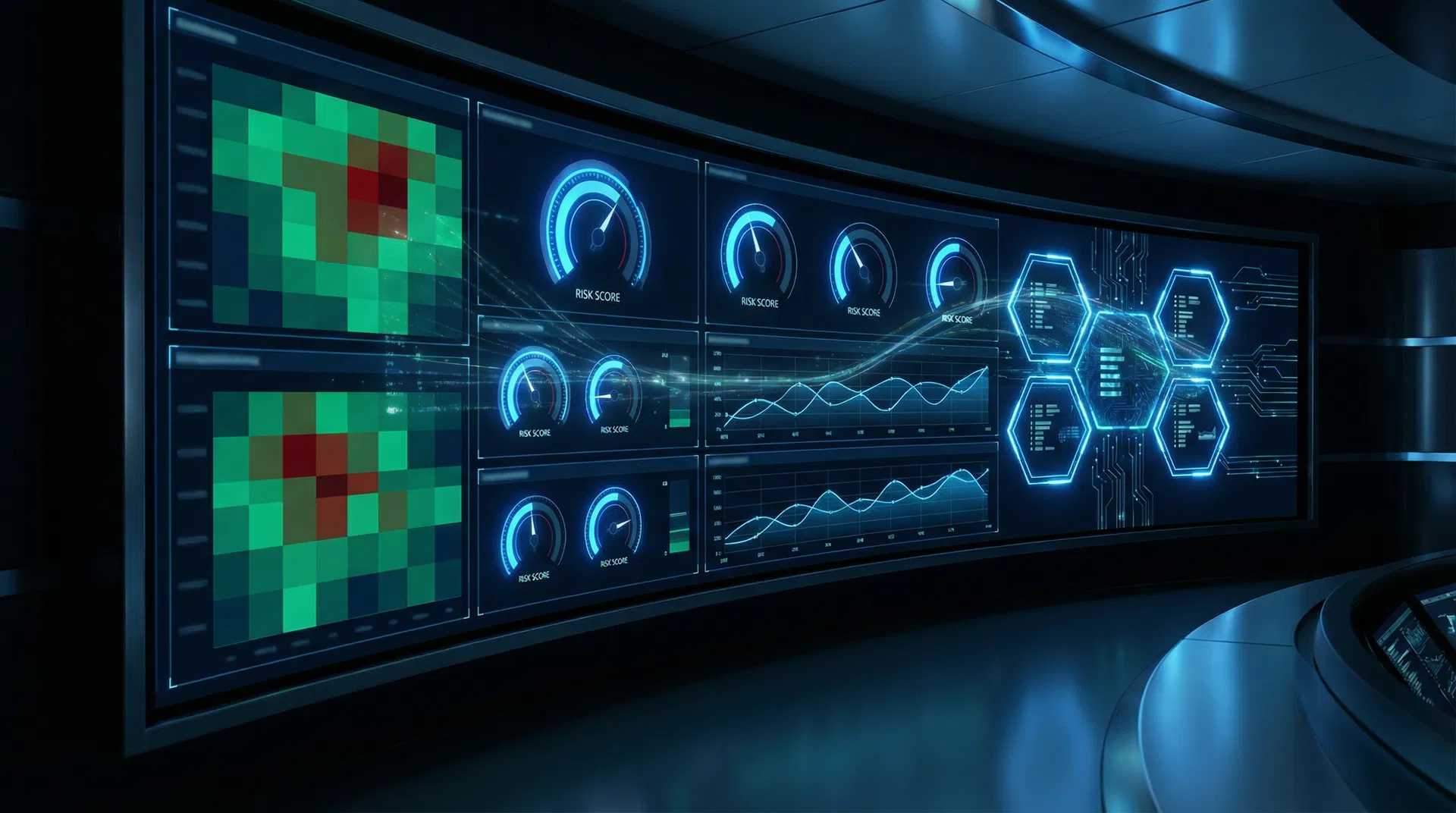
- Sentinel Risk Heat Maps. Visual concentration of risk signals across sites and work fronts.
- Predictive Risk Window Alerts. Elevated exposure periods, routed to the right leadership level.
- Contractor Safety Intelligence Scoring. Comparative contractor risk profiles.
- Leadership Engagement Indicators. Measuring visible leadership control.
- Executive Operational Risk Briefings. Emerging trend narratives for executive review.
Every output is engineered for a decision-maker, not a data analyst. SASI™ exposes scores, risk bands, and recommended actions. The scoring methodology itself stays inside the system.
Engineering origin
Built in the field, not the lab
SASI™ was engineered by Sentinel Safety Group's HSE professionals, people who have run safety in Gulf Coast petrochemical construction and turnarounds, managed simultaneous operations, and made risk decisions under real operational pressure. The doctrine was set before the first line of code.
AI augments leadership. It never replaces it.
Authority remains human. Accountability remains intact. Technology strengthens visibility and sharpens decision-making when it is engineered and governed correctly.
Risk is created in execution, not in reports.
Safety is a function of operations, not a separate system. SASI™ is built to govern execution, not to archive it.
Leadership presence determines control.
Frontline leadership, not front office leadership. Intelligence has to reach the leader who can act, in time to act.
Data without structure creates noise.
SASI™ creates intelligence: structured, prioritized, and aligned to the decisions leadership actually has to make.
Engineered by HSE engineers, not software vendors.
This is a safety organization that engineered the technology, not a technology company that discovered the safety market.
Intelligence, then action, then control, then outcome.
The sequence is the product. Every layer of the system exists to move an operation along it.
Lorenz lives inside SASI™
See instability. Predict consequence.
In 1963, Edward Lorenz proved that every chaotic system has a predictability horizon: a wall beyond which forecasts cannot be defended, regardless of computing power. Lorenz is the component inside SASI™ that decides which forecasts the platform is willing to publish and defend, and which it refuses to publish at all.
Industries we serve
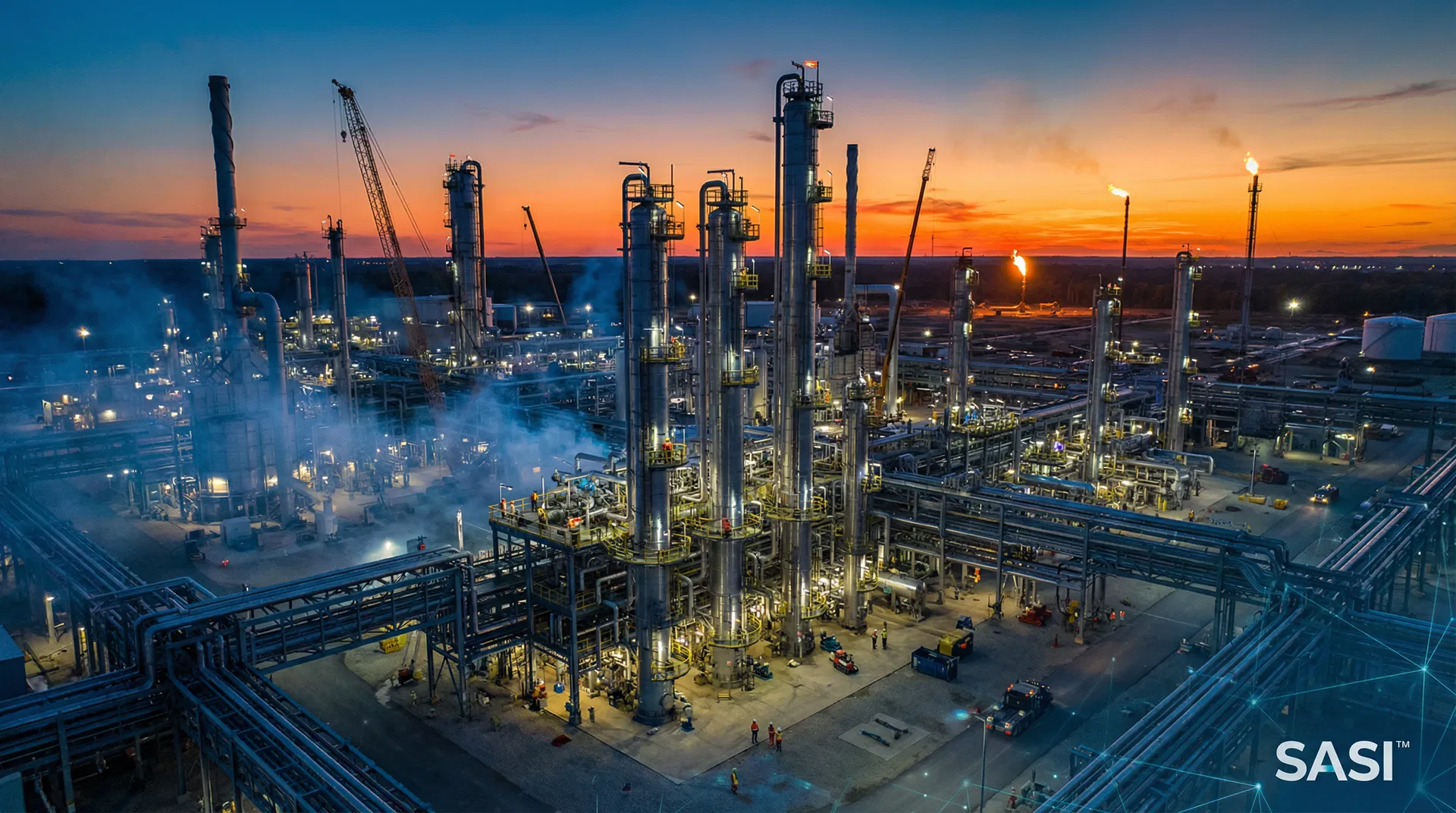
Where a wrong call costs a life, not a click
Oil and Gas
Upstream, midstream, and downstream operations.
Chemical and Petrochemical
Continuous process environments and turnarounds.
Manufacturing
Production-driven exposure and contractor integration.
Infrastructure and Heavy Civil
Capital projects with compressed schedules.
Energy and Utilities
Generation, transmission, and planned outages.
Marine and Shipyard
Coupled weather and operations, restricted work areas.
Environmental Remediation
Dynamic site conditions and concentrated exposure.
All industries
How SASI™ applies to your operations.
Lead the future of safety
Move from reactive compliance to predictive control.
Sentinel engages a limited number of qualified operations for briefing and controlled pilot deployment. Tell us about your environment and we will respond personally.